Showing posts with label Richard Womack 1655-1685. Show all posts
Showing posts with label Richard Womack 1655-1685. Show all posts
Wednesday, October 12, 2022

Monday, June 12, 2017
A visit to Petersburg, Virginia- in 1655-1685 Richard Womack set out from this fort to trade with the Indians
We drove to Petersburg, Virginia on our way to North Carolina. This is the area, just south of Richmond, where the Womack's lived in the 1600's. We wanted to see the ruins of the fort and trading post where Richard Womack set out from to trade with the Indians in the mid 1600's. The path from here followed south along the Occaneechi Trail.
We stopped at the visitor's center, and found out that the courtyard there was the setting for the washing area scene in "Mercy Street" in case you are a fan (we are!) I remembered the gate to the street vividly as that is where the young slave boy had to decide whether to remain with his mistress or make a break for freedom.


Nearby was the trading post, now known as "Peter Jone's Trading Post" which had originally been called Fort Henry. It was commanded by Abraham Wood in Richard Womack's time. Later it was left to Abraham's son-in-law, Peter Jones, for whom Petersburg was named. The ruins stood near the banks of the Appomattox River.


 |
| 350 years after Richard Womack set off from here on trading expeditions! |
Connected Blog Posts:
1655-1685 Richard Womack- Trading Paths 1600's
1655-1685- Richard Womack- Fellow Traders
Further information:
Historical Marker for Peter Jone's Trading Station
Abraham Wood
1673 Abraham Wood's letter describing a trading expedition
Sunday, May 14, 2017
Richard Womack 1655-1685- Trading Paths in the 1600's
The Occaneechi Trail
 |
| The Occaneechi Trail from Ft. Henry (Petersburg) to Occaneechi Town -1 |
When Richard Womack went on his trading expeditions for William Byrd I, he followed a system of old, long established Indian trading paths. Originally the traders used Indian guides, and hired Indian porters to carry their trading goods. These paths were narrow footpaths- which early travelers would follow single file through the wilderness. They generally followed just below the ridges so those walking on the path could see the territory below them, but not be seen. Not being seen was important; not only for hunting, but for survival from unfriendly human elements.
With financial backing from Byrd, however, it is likely that
Richard and his fellow traders were trading on a scale large enough to require
the use of packhorses for their goods. This caused some discontent among the
Indian tribes; not only did the use of horses take away the income that came in
from Indian porters, but horse hoofs did some damage to the paths that had been
tread lightly by human footsteps clad in hide moccasins. In some places,
traders with horses had to divert from the traditional narrow footpath due to
bulk with packs and inability of horses to follow difficult terrain a human
might manage; rocky climbs for instance.
Richard and the traders who traveled with him had to have
had considerable survival skills. They would have needed to hunt quietly along
the way so as not to risk unwanted attention from possibly unfriendly foes. It
is likely that they were as skilled with a tomahawk, hatchet, and hunting knife
as they were with their long rifles. They would have camped along the way, as
well as staying at friendly Indian villages with whom they traded. They likely
spoke some of the language of these tribes. It was known that the Occaneechi
dialect was well understood by most of the tribes they traded with in the area.
Richard was probably able to speak with other tribes using a rudimentary
knowledge of the Occaneechi language. Besides the Occaneechi, it is likely that
traders ventured out to trade with the Saponi, and Catawba
in the south and the Cherokee to
the west.
Richard’s packhorses likely carried those goods which the
Indian tribes desired; metal tools, cooking kettles, pots, and utensils, woolen
blankets, cloth and European style clothing, liquor, and glass beads and other
trinkets for adornment. In return, the traders would stock up on deer hides and
furs from beaver, otters, raccoons, etc. which were highly desired by
Europeans. In early times firearms and
weapons were allowed for trade to Indians, but as tensions rose between the
groups, trade in weapons was forbidden. 2
The distance from Fort Henry to Occaneechi Town was about 90 miles- at least 30 hours of walking/riding along the path- a minimum of a week's journey each way, plus time for rest and trade at each end of the journey. It is likely that these trading ventures kept Richard away for home for a month or more at a time.
Resources:
1-http://www.pfeife-tabak.de/Artikel/Pfeifenkunde/Indianer6/indianer6.htm
2-http://ncpedia.org/history/colonial/trade-routeshttp://ncpedia.org/indian-trading-paths
Richard Womack 1655-1684- Fellow Traders in 1684
Spring 1684
In 1684, Richard and a party of fellow traders working for Byrd set out on a spring expedition. The Appomattox River, at the edge of Richard's lands, led southward to Fort Henry- less than 10 miles away. Since 1646 this fort had marked the dividing line between the British colony and Indian lands; travelers passing through had to have permission to trade with the other side. The commander of the fort was Abraham Wood, who ran his own lucrative indian trade, but by 1676 Wood had passed down the position to his son-in-law, Peter Jones. (Later the town which rose around the fort took on his name- Petersburg.)
The men in Richard's party would follow the Occaneechi trail southward. We know from a letter from William Byrd to a friend that they were also to trade with indians west of the trail itself. The men traveling with Richard were surely well known to him; they had likely traveled and traded together over the years and knew each other well.
Richard was about 28 years old. He had been married to Mary Elizabeth Puckett, daughter of his neighbors John Puckett and wife Anne Jeffreys, for less than a dozen years. Both of his wife's parents had died several years before, but her brothers had inherited the land, which lay next to Richards, and likely helped Mary Elizabeth with the crops when her husband was away trading. Richard's eldest son, Richard, was about 10, William was about 5. It is possible there were two younger children; if so little Elizabeth was still a toddler, and John a baby.
John Sturdivant- referred to by Bryd as "old Sturdivant" was likely a neighbor of Richard's- he had 600 acres on Hatchers Run, a branch of Swift Creek, north of the Appomattox, and near where Richard lived. However, He also had over 3500 acres on the other side of the Appomattox in Charles City County- making him a sizeable landowner. He had been trading with the Indians since at least 1673. In 1676 He had been a vocal supporter of Nathaniel Bacon, and was "exempted from pardon" in a proclamation by the Governor, however this was revoked by the King's commissioners, so, we can assume that in the end he escaped punishment. John was traveling with one of his sons (likely the eldest) leaving his wife Sarah, son Daniel, and several younger sons at home.
Thomas Shippey II was an experienced trader, who we know had been on an expedition in 1672 with Edward Hatcher and John Davis. He lived in the Bermuda Hundred and was the son and heir of Thomas Shippey I who came from England to Virginia in 1620 on the "Supply." His father had been well respected in the colony and was one of the persons appointed to inspect the quality of tobacco for export from the region. Thomas Shippey II was about 50 years old at this time; he had a wife named Martha, and he had a daughter, Martha, who had married Edward Stratton III in 1678 at St. John's Parish church. He also had a son, Thomas Shippey III who would die in 1688.
John Milner was about 40 years old. We believe he had married Ann Parker, a widow who had 3 children; Ann, Mary, and William.
Of the sixth trader, Hugh Cassell, I can find nothing.
Richard Womack 1655-1684- William Byrd I
 |
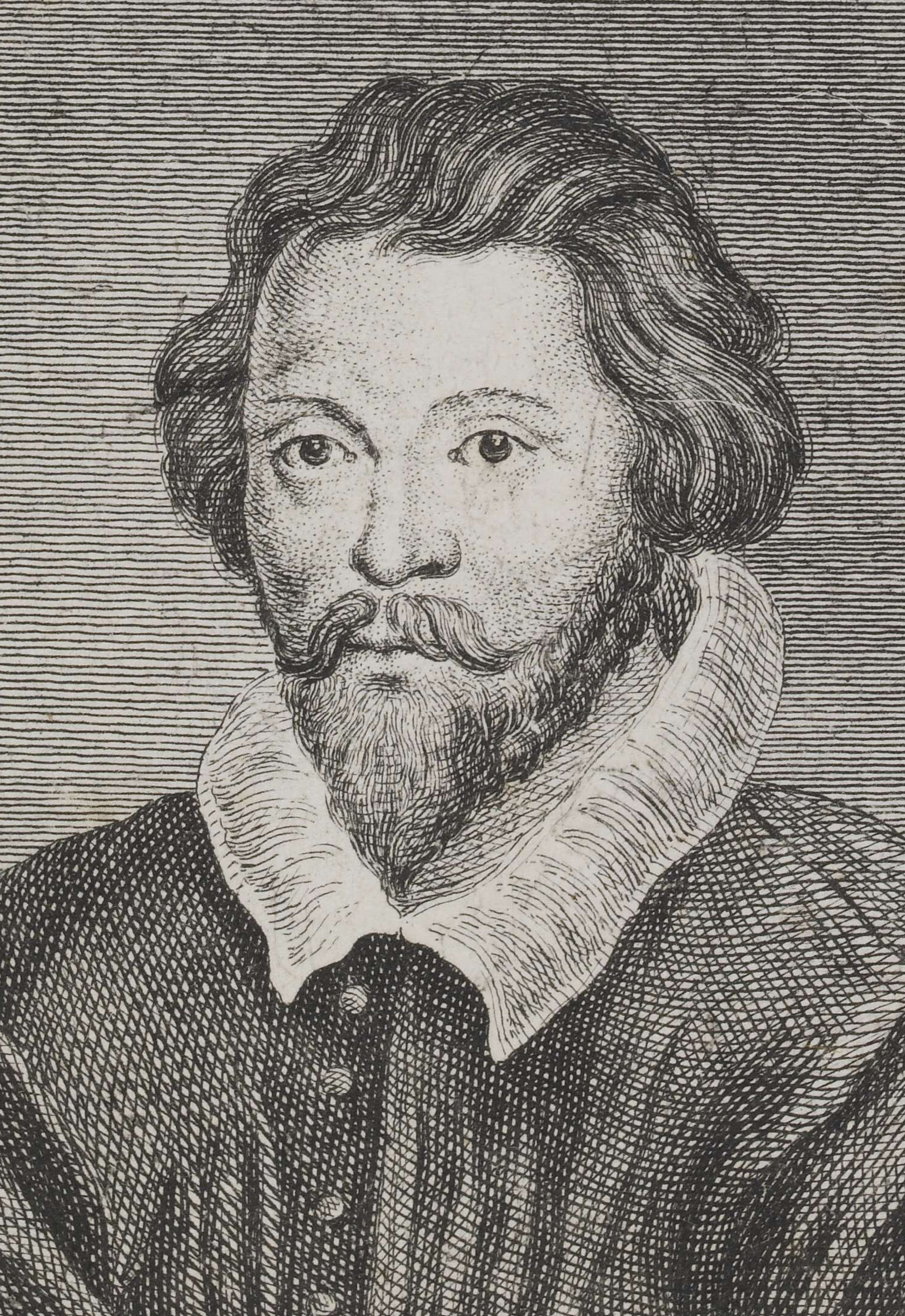
| William Byrd I |
Young Richard Womack connected with one of the wealthiest men in the colony when he became a trader for William Byrd I. Byrd had inherited 1200 acres from his uncle, Thomas Stegge, at the falls of the James, the western frontier of the settlement. While still in his twenties, William Byrd became a captain in the local militia and a member of the county court. His main livelihood, however, was that of an explorer and trader. He was interested in exploring the lands that lay to the west; lands still held by local Indian tribes. He became active in Indian trade and sent out caravans of traders to remote villages to expand the lucrative fur trade. He also imported bonded servants and slaves to Virginia; white bonded servants, negro slaves, and captured Indian children. Byrd increased his lands, eventually owning nearly 30,000 acres. He grew tobacco on his plantation and owned warehouses along the James River. He was one of the wealthiest men in the colony of Virginia.
He nearly lost his fortune when he sided for a time with Nathaniel Bacon, nephew of Governor Berkeley and an Henrico neighbor with whom he had explored and conducted trading expeditions at the request of the Governor. (See Bacon's Rebellion and the men of Henrico) In time, however, Byrd returned his loyalty to the Governor, thus retaining his life and his lands. His wealth continued to grow; in 1688 he bought land from the Blands for 10,000 lbs. of tobacco and cask, build a home on what became Westover Plantation. He died there in 1704.

His son, William Byrd II had been educated in England, but returned to Westover to become a planter. He was a member of the house of burgesses and served on the Governor's council until his death in 1744. He is most famous for founding Richmond, wich was laid out in 1737. He was, however, also known for being an unkind and unfaithful husband, and a cruel master who frequently beat his servants and slaves. By 1768 he had squandered his father's fortune.

Subscribe to:
Posts (Atom)